Patients do not only call during office hours.
They call after work or on the weekend, when symptoms change, when they remember they need an appointment, or when they finally have a quiet minute to deal with their health.
For clinics, that creates a difficult coverage gap. The phone line is one of the most important access points for patients, but front-desk coverage usually ends when the office closes.
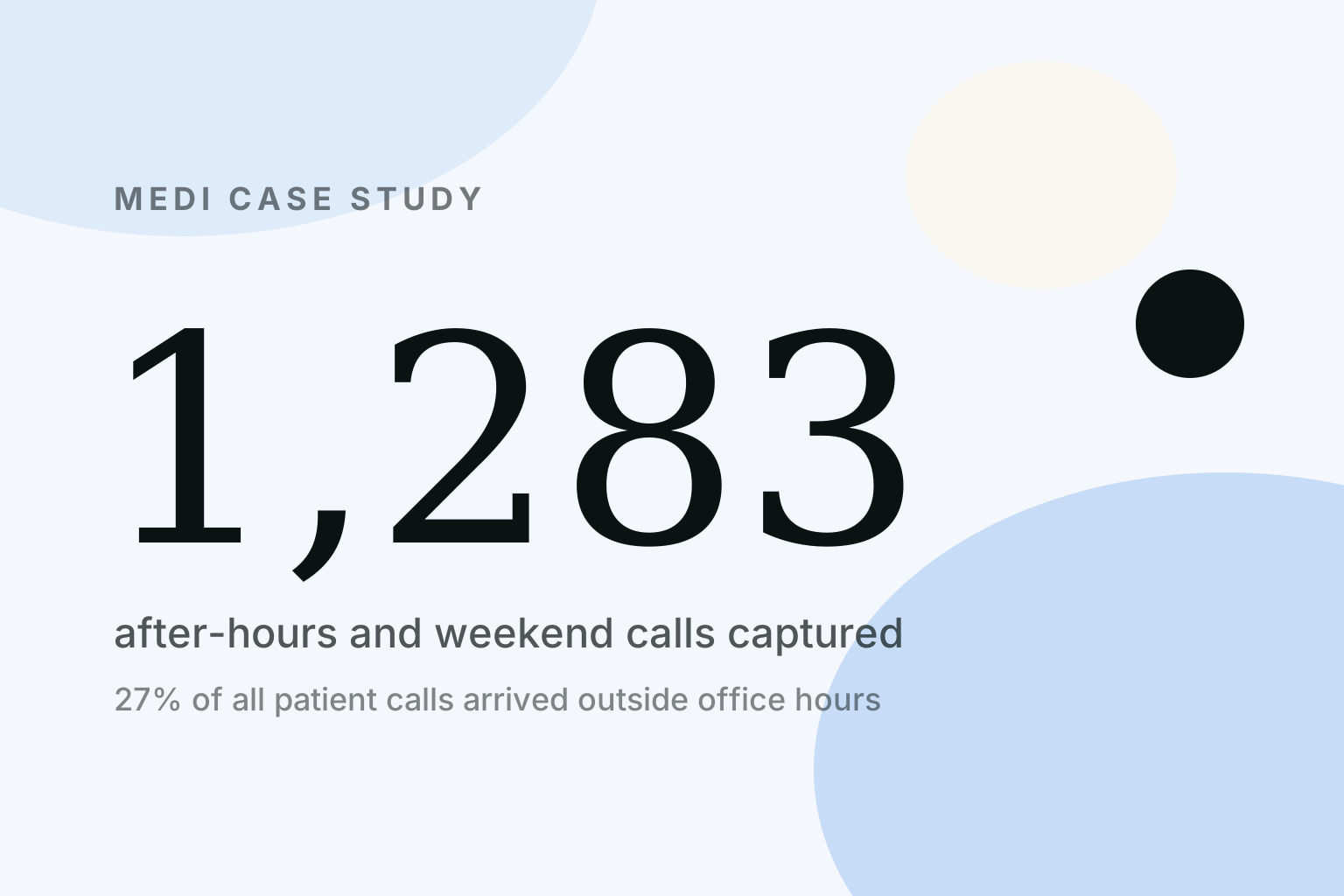
At one clinic, more than a quarter of all patient calls came after hours or on weekends.
Before AI phone coverage, many of those calls would likely have gone to voicemail or been pushed into the next business day. That can create delayed bookings, frustrated patients, and an even heavier phone queue for staff when the clinic reopens.
Medi gave the clinic an always-on front desk.
Across 103 active days, Medi handled 4,800 calls, booked 884 appointments, and captured 1,283 after-hours or weekend calls. It also resolved 57% of calls fully through AI, representing about 2,736 patient interactions completed without staff needing to step in.
What happened when a clinic used after-hours AI phone coverage?
An after-hours AI front desk helped one medical clinic capture 1,283 evening, weekend, and out-of-hours patient calls over 103 active days. Medi handled 4,800 total calls, booked 884 appointments, resolved about 2,736 calls fully through AI, and helped reduce the next-day backlog that missed calls can create.
Medi coverage impact at a glance
This case study is about coverage: what happens when the clinic phone line keeps working after the front desk has gone home.
The after-hours gap was not marginal. For this clinic, 27% of all patient calls came after hours or on weekends, when a traditional front desk would usually be unavailable.
Over 103 active days, Medi captured 1,283 of those out-of-hours calls and turned them into structured patient interactions instead of voicemail. It booked 884 appointments overall, about one for every five to six calls it handled, and fully resolved 2,736 calls on its own, a 57% AI resolution rate across everything it answered.
Supporting metrics reinforce the picture: 4,800 total calls handled, 87% positive caller sentiment, and an average call length of 1 minute 33 seconds for structured, routine workflows.
Medi stands out for clinics with after-hours demand because it does more than take a message. It can identify why the patient is calling, complete approved workflows such as booking, and escalate or guide the caller when the situation requires human attention or urgent care.
Why after-hours calls become next-day backlog
For many medical clinics, the daily phone queue does not start at 9 a.m. It starts the night before.
Patients leave voicemails after work, weekend callers wait for Monday, and appointment requests stack up before staff arrive. By the time the front desk opens, the team is answering new calls while digging through yesterday’s unresolved demand.
The pattern is predictable. Patients who were ready to book wait longer than they should, staff begin the day in voicemail review instead of live patient support, and Monday’s call volume swells past the clinic’s true same-day demand. Routine booking requests end up competing with urgent, complex, and in-person needs, and some patients call twice because they never learned whether their first message landed.
Primary care access is already under pressure. The American Medical Association reported that physician burnout remained near 48% in 2023, even after improving from pandemic highs, and research published in Annals of Internal Medicine estimated that burnout costs the U.S. health care system billions of dollars each year through turnover and lost clinical time. After-hours calls are only one part of clinic operations, but they are a visible place where patient demand quietly becomes staff workload.
For this clinic, the coverage gap was measurable: 1,283 of 4,800 calls came after hours or on weekends. At more than one call in four, after-hours coverage was a major part of patient access, well beyond a convenience feature.
How Medi handled after-hours patient calls
Medi was deployed as an AI front desk on the clinic’s phone line. When patients called outside traditional office coverage, Medi could answer, understand the request, and move approved workflows forward.
The workflow was built around the clinic’s real call patterns. Medi kept the line responsive when staff were off the clock or when volume outran normal coverage, and worked out whether the caller wanted to book, reschedule, ask a common question, or raise something that needed a person. For routine scheduling requests it checked availability, booked the appointment, and sent a confirmation text instead of simply taking a message.
Safety sat above all of it. A caller describing symptoms that could signal an emergency was guided toward urgent or emergency care rather than treated as ordinary scheduling, and when a call required staff follow-up, Medi preserved the structure of the request so the team did not have to reconstruct the situation from a voicemail.
Example: when an appointment request sounded urgent
One de-identified and paraphrased after-hours example involved a caller who wanted to book an appointment for a family member who was having trouble breathing.
Medi first treated the situation as potentially urgent and directed the caller to emergency care. When the caller clarified that it was not an emergency and described the symptoms as familiar and non-severe, Medi asked safety follow-up questions, confirmed there were no emergency warning signs, and then booked the earliest suitable appointment.
That moment matters because medical phone calls are not all simple scheduling requests. An AI front desk for healthcare has to know when to stop and when to send the caller toward emergency care instead. In this case, Medi helped the caller move forward while keeping the safety boundary clear.
What 57% AI resolution means for after-hours coverage
Medi handled 57% of calls fully through AI during the study period. In a 4,800-call sample, that represents about 2,736 patient interactions completed without staff needing to manually answer, interpret, route, or finish the request.
For a coverage-focused case study, that number is important because after-hours calls often create work twice: first when the patient leaves a message, and again when staff return the call. If the request is routine and can be completed at the time the patient calls, the clinic avoids both the delay and the follow-up loop.
The average call length was 1 minute 33 seconds, which mostly reflects how structured many after-hours requests turned out to be: identify the patient, understand the need, complete the approved workflow, or escalate.
That is why the 884 appointments booked are central to the story. Booking was the dominant patient request for this clinic, and Medi converted out-of-hours demand into scheduled care rather than next-day administrative backlog. It worked out to roughly one appointment for every five to six calls Medi handled.
After-hours voicemail vs. Medi AI front desk
Without after-hours coverage, the evening call becomes a voicemail and the weekend request waits for the next business day. A booking means staff returning the call later, an urgent-sounding symptom may sit in an unstructured message overnight, and Monday starts with a backlog review, with whatever context exists buried in recordings.
With Medi on the line, the same call is answered in the moment. Requests are captured and routed while the clinic is closed, routine bookings are completed and confirmed by text before the office reopens, urgent-sounding calls get safety-first routing toward the right level of care, and what does reach staff arrives as a structured, summarized escalation instead of a mystery voicemail.
What clinics should take from this case study
This case study shows that after-hours coverage can be one of the fastest ways for clinics to improve access without extending front-desk staffing across evenings and weekends. The reason is simple: when more than one in four calls arrives outside normal coverage, the phone line is only partially available unless the clinic has a way to respond after hours.
A few lessons carry over to other clinics. After-hours demand can be a major share of total volume, 27% in this case, and booking matters because patients call when they are ready to schedule rather than when the office happens to be open. Resolution rate tells you more than answer rate, since an answered call still creates work if staff inherit every request. Clear safety boundaries for urgent symptoms are essential, and every routine call that resolves overnight is one less item in the morning backlog.
For this clinic, Medi helped close a coverage gap that traditional staffing could not easily solve. The practice did not need to extend front-desk hours seven days a week to make the phone line more responsive. Medi kept the line available when patients were still calling.
The result was fewer missed moments and lighter mornings for the team.
FAQ
How long does it take to set up after-hours AI phone coverage?
Setup time depends on the clinic’s phone system, scheduling access, approved workflows, and escalation rules. The key question is not only when the AI can answer calls, but which after-hours requests it is allowed to complete, escalate, or route.
What should an AI front desk do when a call sounds urgent?
An AI front desk should use safety-first routing when a caller describes potentially urgent symptoms. It should not force routine booking when emergency warning signs are present; it should guide the caller toward urgent or emergency care according to the clinic’s approved safety rules.
Can patients book appointments after the clinic is closed?
Yes, if the clinic has approved after-hours booking workflows and scheduling access is available. In this case study, Medi booked 884 appointments by understanding the caller’s request, checking availability, completing the booking, and sending confirmation.
How do clinics prevent after-hours AI coverage from creating extra work?
Clinics should define which calls can be resolved automatically, which require escalation, and what information staff need when they review an escalated case. The goal is to resolve routine demand while giving staff structured context instead of another vague voicemail queue.
What metrics show whether after-hours coverage is working?
Useful metrics include after-hours call share, calls captured outside office hours, appointments booked, AI resolution rate, escalation rate, next-day follow-up volume, caller sentiment, and average call length. For this clinic, the strongest signal was that 27% of all calls came after hours or on weekends.
Conclusion
This clinic needed its phone line to keep working when patients were still calling, and voicemail was never going to do that.
Over 103 active days, Medi handled 4,800 calls, captured 1,283 after-hours or weekend calls, booked 884 appointments, and resolved about 2,736 calls fully through AI. For clinics that struggle with voicemail, weekend demand, or Monday morning call spikes, after-hours coverage can turn missed moments into scheduled care.
To see how Medi covers a clinic phone line seven days a week, book a walkthrough.
Sources and notes
Medi internal call analytics for this de-identified clinic deployment, covering 103 active days.
American Medical Association burnout survey context, reported by Axios: Physician burnout rates improve.
Burnout cost context from Annals of Internal Medicine, reported by TIME: Physician Burnout Costs the U.S. Billions of Dollars Each Year.
Primary-care access and scheduling context, reported by The Wall Street Journal: Seeing a Doctor Doesn't Have to Be So Frustrating.