For busy family practices, phone volume is an everyday operational load, and it rarely lets up.
One high-volume clinic was receiving more than 400 patient calls a day, with demand peaking in the morning and continuing into the evening. On its busiest day during the study period, 933 calls came in.
At that level, missed calls, long hold times, and staff burnout usually mean the phone line has outgrown the traditional front-desk model, however hard the team works.
That is where Medi came in.
Medi acted as an AI phone system for the family practice, answering inbound patient calls instantly, identifying callers, understanding the reason for the call, and completing common workflows such as booking, rescheduling, answering FAQs, and escalating to staff when a human was needed.
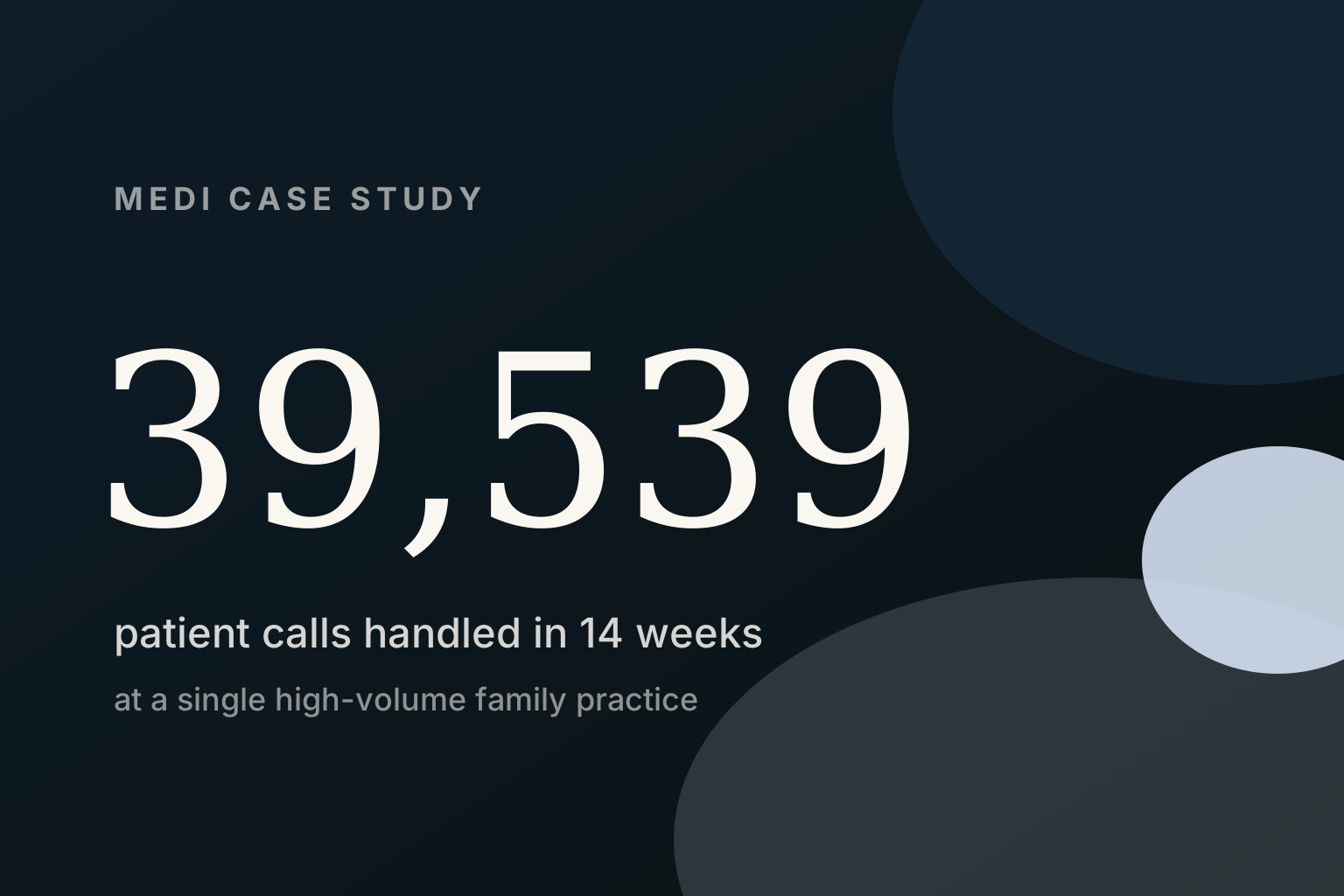
Across 95 active days, Medi handled 39,539 patient calls for this clinic. Nearly half of those calls were resolved fully by AI, which means Medi completed about 18,979 patient interactions without a staff member needing to step in.
What happened when a family practice used an AI phone system?
An AI phone system helped one high-volume family practice handle 39,539 patient calls in 14 weeks. Medi answered calls instantly, resolved about 18,979 calls fully through AI, booked 5,666 appointments, and captured 5,206 after-hours or weekend calls that could otherwise have become voicemails, missed calls, or next-day administrative work.
Medi impact at a glance
One high-volume family practice used Medi to turn a crowded phone line into a more reliable access point for patients. The most important results were scale, resolution, and access: Medi handled hundreds of calls a day, resolved nearly half without staff involvement, and turned thousands of patient calls into booked appointments.
The scale was real. Medi handled 39,539 patient calls over 95 active days, an average of 416 a day, and the busiest single day reached 933.
Patient access came with it. Medi booked 5,666 appointments, roughly one for every seven calls it handled, and captured 5,206 calls that arrived after hours or on weekends.
Front-desk capacity was protected along the way. Medi handled 48% of calls fully through AI, about 18,979 interactions that never needed a staff member, which averaged out to some 200 AI-resolved calls per active day across booking, rescheduling, FAQs, and structured escalation.
Callers were comfortable with it too. Sentiment held at 88% positive, the average call ran 1 minute 38 seconds, patients completed common requests without waiting on hold, and urgent-but-not-emergency needs could still be captured after hours and routed into a structured workflow.
Medi stands out for high-volume family practices because it does more than answer the phone. It identifies what the patient needs, completes routine administrative workflows, and escalates structured cases to staff when human judgment or follow-up is required.
Why phone volume breaks the traditional front desk
Primary care demand often arrives in waves. Monday mornings, post-holiday periods, prescription refill rushes, same-day appointment requests, lab follow-ups, and after-hours messages can all hit the same small front-desk team.
The operational problem is simple: patients call when they need help, but staff can only work one conversation at a time.
When a clinic receives hundreds of calls per day, even a well-trained team faces compounding pressure. Patients wait longer to ask simple questions while appointment requests roll to voicemail. Staff hours drain into repetitive scheduling and routing work, urgent-but-not-emergency requests slip to the next business day, and the phones interrupt every in-person interaction at the desk.
Industry context points in the same direction. The American Medical Association reported that physician burnout remained near 48% in 2023, even after improving from pandemic highs, and research published in Annals of Internal Medicine estimated that physician burnout costs the U.S. health care system billions of dollars annually through turnover and lost clinical time. Administrative load is not the only cause, but front-desk bottlenecks are among the most visible places where operational pressure shows up.
For this clinic, the numbers made the problem impossible to ignore. Averaging 416 calls per day over 95 active days meant the phone line was a major access point for care in its own right. The busiest day, with 933 calls, also showed why averages understate the challenge: family practices need a phone operation sized for the spikes, and a 933-call day is a very different problem from a normal Tuesday.
How Medi handled calls at real-world scale
Medi was deployed as an AI front desk on the clinic’s live phone line. Patients called the same clinic number, but instead of waiting on hold or going straight to voicemail during busy periods, they could speak with Medi immediately.
The workflow was designed around the most common administrative requests in a family practice. Medi picked up inbound calls without adding another person to the front-desk queue, which mattered most during peak windows when several patients were calling at once. It confirmed who was calling and what they needed, whether that was booking, rescheduling, a clinic FAQ, or something for staff, and when the request fit an approved workflow it carried it through: checking availability, booking the appointment, and sending a confirmation text.
Medi did not replace clinical judgment. Calls that required human review or a more sensitive decision were routed and escalated in a structured way, and the system kept working after hours, capturing 5,206 evening and weekend calls over the study period.
Example: an after-hours prescription appointment
One de-identified example came from an after-hours caller who needed an urgent prescription appointment.
Medi recognized the urgency, confirmed the situation was not an emergency, searched live appointment availability, and attempted to book the most suitable opening. When the first appointment slot was no longer available, Medi recovered, searched again, booked the next suitable appointment, and sent the patient a confirmation text.
For the patient, the experience was a single short call that ended with a booked appointment. For the clinic, an after-hours request became scheduled care instead of a voicemail, a missed call, or a task waiting for staff the next morning.
What 48% AI resolution means for clinic staff
The most important number in this deployment is resolution, because answering was never the hard part.
Medi handled 48% of calls fully through AI during the study period. In a 39,539-call sample, that means about 18,979 patient interactions did not require front-desk staff to manually answer, interpret, route, or complete the request.
That matters because small time savings become large quickly in a high-volume practice. Spread across the 95 active days, Medi resolved about 200 calls per day without staff intervention.
If a clinic is receiving 400 or more calls per day, even a small reduction in repetitive phone work gives staff more room to support in-person patients, review escalations, coordinate with providers, and handle the conversations that genuinely need a human.
The average call length was 1 minute 38 seconds, which mostly reflects how routine and structured much of the volume was. A system that can identify the caller, understand the need, complete the workflow, and escalate appropriately keeps ordinary requests short.
The core promise of AI phone support in primary care is narrower than the hype suggests: reduce the repetitive phone work so patient demand does not evaporate whenever staff are busy. Clinical care, and the sensitive moments that need a person, stay with people.
AI front desk vs. traditional phone coverage
With traditional phone coverage, peak volume means calls stacking in a queue or rolling to voicemail, after-hours calls become next-day tasks, and staff manually check availability and confirm every booking. The same handful of FAQs get answered aloud all day, every edge case has to be spotted and routed by a person, and when something lands in voicemail the team reconstructs what happened from the recording.
With Medi on the line, several patients can be answered at the same moment, after-hours calls are captured and routed while the office is closed, and bookings run end to end: availability searched, appointment placed, confirmation texted. Approved FAQs get consistent answers, structured cases are escalated when human help is needed, and staff see summarized calls with context instead of a voicemail backlog.
What clinics should take from this case study
This case study shows that AI phone support can operate at real clinic volume. Medi ran on a live line for 95 active days and handled tens of thousands of patient calls, well beyond a demo environment or a scripted pilot.
For high-volume practices the lessons are concrete. When call volume regularly exceeds staff capacity, missed calls are an access problem before they are a staffing problem, and peak days matter more than averages, since a single 933-call day will swamp a desk that looks adequately staffed on paper. AI earns its keep on routine administrative work rather than clinical decisions, and at this scale a 48% resolution rate stops being an abstract percentage: it meant about 18,979 calls staff never had to touch.
After-hours capture turned overnight demand into scheduled care instead of morning backlog. Resolution proved more important than answering, because an answered call still lands on staff if the request does, and structured call summaries kept the team’s visibility intact even when the AI took the first step.
For this family practice, Medi proved that an AI front desk could answer, route, and resolve patient calls at real-world scale, on a live clinic phone line, across 39,539 patient calls.
Sources and notes
Medi internal call analytics for this de-identified clinic deployment, covering 95 active days.
American Medical Association burnout survey context, reported by Axios: Physician burnout rates improve.
Burnout cost context from Annals of Internal Medicine, reported by TIME: Physician Burnout Costs the U.S. Billions of Dollars Each Year.
Primary-care workload and continuity context, reported by The Guardian on Cambridge and INSEAD research: Seeing same GP improves patient health and cuts workload of doctors.
FAQ
How long does it take to deploy an AI phone system for a high-volume clinic?
Deployment time depends on the clinic’s phone system, scheduling workflows, escalation rules, and integration requirements. The important signal in this case study is that Medi operated at real clinic volume across 95 active days, handling 39,539 calls and resolving about 18,979 calls fully through AI.
What workflows should a clinic automate first?
High-volume clinics should usually start with repetitive, rules-based workflows such as appointment booking, rescheduling, basic FAQs, caller identification, and structured escalation. These workflows create the most front-desk load and are easier to define clearly than complex clinical decision-making.
What happens when a patient needs a human?
The AI front desk should escalate when a call falls outside an approved workflow, requires clinical judgment, or needs sensitive human follow-up. In this case study, Medi was used to complete routine requests while preserving staff involvement for calls that needed human review.
How should clinics measure whether an AI phone system is working?
The most useful metrics are total calls handled, AI resolution rate, appointments booked, after-hours calls captured, escalation rate, caller sentiment, and average call length. For high-volume clinics, resolution rate matters especially because answered calls still create work if every request ends with staff.
Will patients accept an AI front desk for routine clinic calls?
Patients are more likely to accept an AI front desk when it helps them complete a clear task, such as booking or rescheduling, without waiting on hold. In this case study, 88% of caller sentiment was positive while Medi handled tens of thousands of live patient calls.
Conclusion
This high-volume family practice needed a way to answer patient demand as it arrived, and a better voicemail box was never going to deliver that.
Over 14 weeks, Medi handled 39,539 calls, booked 5,666 appointments, resolved about 18,979 calls fully through AI, and captured 5,206 after-hours or weekend calls. The result was a more scalable phone operation for the clinic and a simpler experience for patients who needed to reach care.
To see how Medi would handle your clinic’s call volume, book a walkthrough.